
Common Breast Conditions: Causes, Symptoms & When to Seek Medical Help
Meta Description: Learn about common breast conditions like fibroadenoma, breast cysts, mastitis, fibrocystic changes, and breast cancer. Know the symptoms, causes, and when to consult a doctor for proper diagnosis and treatment.
Common Breast Conditions Every Woman Should Know About
Breast health is an important part of overall well-being. Many women experience breast-related issues at some point in their lives. While most breast conditions are benign (non-cancerous), it is important to understand the common problems, their symptoms, and when to seek medical attention.
Here are the most common breast conditions:
1. Fibroadenoma (Most Common Benign Breast Lump)
- What it is: A solid, non-cancerous tumor made of glandular and fibrous tissue.
- Who gets it: Most common in women aged 15–35 years.
- Symptoms: Painless, smooth, rubbery, movable lump.
- Treatment: Often observed. Surgical removal if large, painful, or growing.
2. Breast Cysts
- What it is: Fluid-filled sacs inside the breast.
- Symptoms: Round, movable lump that may feel tender, especially before periods.
- Treatment: Aspiration (draining fluid) if symptomatic. Usually harmless.
3. Fibrocystic Breast Changes
- What it is: Lumpy, painful breasts due to hormonal changes.
- Symptoms: Breast pain, tenderness, lumpiness (especially in upper outer part of breast).
- Who gets it: Very common in women aged 30–50.
- Treatment: Lifestyle changes, pain relief, and sometimes hormonal therapy.
Healthy Breast vs Fibrocystic Breast Changes:
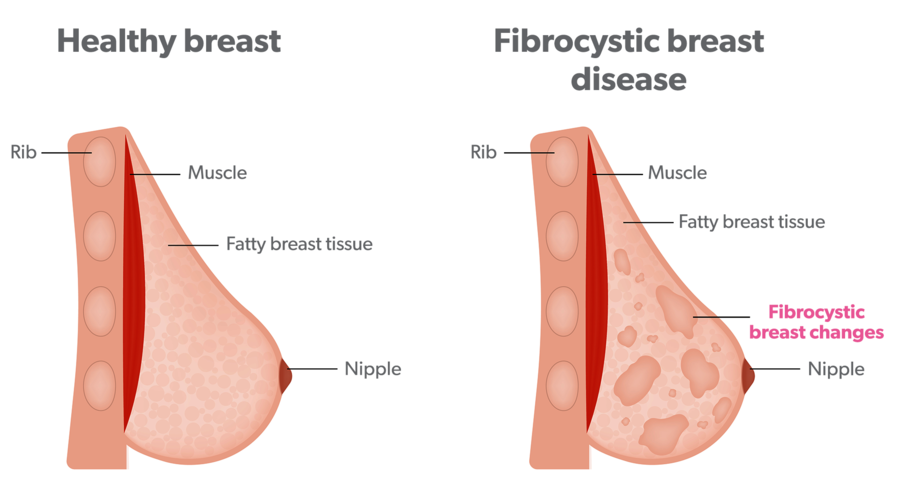
Breast lumps
4. Mastitis (Breast Infection)
- What it is: Infection of breast tissue, most common during breastfeeding.
- Symptoms: Redness, swelling, warmth, pain, fever, and flu-like symptoms.
- Treatment: Antibiotics, pain relief, and continued breastfeeding (if lactating).
5. Breast Cancer
- Warning Signs:
- New lump or thickening
- Change in breast size or shape
- Dimpling or puckering of skin
- Nipple discharge (especially bloody)
- Inverted nipple
- Persistent pain in one area
Early detection saves lives. Regular self-examination and screening (mammography after 40–50 years) are very important.
Common Breast Disorders at a Glance:

Female breast disorders, illustration - Stock Image - F034/4713 - Science Photo Library
Detailed Overview of Benign Breast Diseases

Benign Breast Diseases (Mastitis, Fibrocystic changes, etc.): | ditki medical and biological sciences
When Should You See a Doctor?
Consult a doctor immediately if you notice:
- A new lump or change in existing lump
- Breast pain that doesn’t go away
- Nipple discharge (especially if bloody or from one breast only)
- Skin changes (dimpling, redness, scaling)
- Swelling or lump in armpit
- Any change that worries you
Remember: Most breast lumps are not cancer, but only a doctor can confirm after proper examination and tests (ultrasound, mammography, FNAC, or biopsy).
How to Maintain Breast Health
- Perform monthly breast self-examination
- Maintain healthy weight
- Exercise regularly
- Limit alcohol intake
- Avoid smoking
- Get regular clinical breast exams and mammograms as advised by your doctor
Final Note
Breast conditions can range from simple and harmless to serious. Early detection and timely medical advice are the keys to better outcomes.
If you notice any unusual changes in your breasts, do not ignore them. Consult an experienced doctor for proper evaluation and peace of mind.
Stay aware. Stay healthy.
#BreastConditions #Fibroadenoma #BreastCyst #Mastitis #FibrocysticBreastDisease #BreastLump #BreastHealth #BreastCancerAwareness #BenignBreastDisease #BreastSelfExamination #WomenHealth #BreastPain